5 HN users recommended this talk5 months2015–2024score 5.5
Years with an HN recommendation, 2007–2026
HN points to it as evidence of SpaceX's serious simulation capability and as a showcase of GPU compute for CFD.
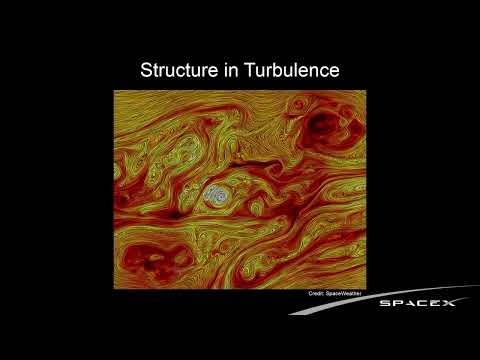
SpaceX engineers present at NVIDIA's GPU Technology Conference on a multi-physics code that simulates the full-scale Raptor methane engine. It covers GPU-based turbulent combustion modeling with adaptive grids and wavelet compression.
“This talk was given at NVIDIA GTC 2015 and inspired me to go into manufacturing” (HN, 2024)
The key was the full scale combustion simulator software that SpaceX developed to design the Raptor. This talk was given at NVIDIA GTC 2015 and inspired me to go into manufacturing [this video] title: "GPUs To Mars: Full Scale Simulation of SpaceX's Mars Rocket Engine"
Talk on full-scale combustion simulation for Raptor; inspired the commenter's career
Here's a fun recent link: [this video] Plenty more options to explore in the links under the video, starting from [link] Then there is NVIDIA's CUDA Zone with lists like [link]
SpaceX rocket engine GPU simulation talk with further links
There are bigger optimizations than 10X with some of the adaptive grid / wavelet compression stuff. I think these are still 2D, but pretty amazing: [this video]
Adaptive grid and wavelet compression in rocket engine simulation
There are bigger optimizations than 10X with some of the adaptive grid / wavelet compression stuff. I think these are still 2D, but pretty amazing: [this video]
Adaptive grid and wavelet compression in rocket engine simulation
I remember that. Fluid dynamics is a very tricky thing to model and the work they did was really cool. There's a good video presentation on it here: [this video]
Presentation on tricky fluid dynamics modeling for rocket engines
Or maybe it is that SpaceX is doing simulations on a level ahead of what everyone else does. Here's one of several amazing videos from SpaceX simulations. (There are more, but I don't have the link to the others) [this video]
How about you also copy the sentence that lies just between those two? "As land slowly settles to a new position over time, the damper neutral position can be adjusted accordingly." And if that doesn't work, the tube can have some kind of rails or just to roll over wheels on top of the pylons. (my own thoughts as non expert) Rocket engineers with advanced simulation tools[0] have been working on this for 5 months before releasing the paper. Do you really think they somehow missed this obvious issue? [0] [this video] Edit: Further in the paper it says: "The tube will be supported by pillars which constrain the tube in the vertical direction but allow longitudinal slip for thermal expansion as well as dampened lateral slip to reduce the risk posed by earthquakes." So pretty much what I've said. The other quoted sentence refers to placement of pylons themselves.
Shows SpaceX engineers use advanced simulation tools
> that would be complex and severely impact performance on GPU architectures Agree about the complexity. However, adaptive grids can be a huge win in terms of performance. The GPU doesn’t need to simulate the whole 8G grid nodes, it only simulates much fewer nodes, only in the areas of large gradients / higher frequencies of the simulated fields. Here’s an old SpaceX presentation about their GPU simulations of rockets: [this video]
SpaceX presentation on GPU rocket simulations using adaptive grids
In addition to being full-flow, Raptor runs on methane (CH4, the simplest hydrocarbon), which already exists many places in the solar system (including Mars), and is easier to manufacture than kerosene or liquid hydrogen. SpaceX developed an incredibly advanced simulator to make it happen: [this video]
[this video] Yeah, they were doing high fidelity high performance computational fluid dynamics simulations and aerodynamic simulations by 2015. So I think they've done the sims, and now they're doing it in real life.
To put those phrases in context, I think they would have required more effort than the Apollo project. > Obviously, although I have doubts that the computations being performed by these "GPU solvers" really require a modern custom-built GPU and couldn't have been done on FPGAs or arrays of microcontrollers from the 80s. Here's a talk by the guys: [this video] The Cray 2 could do <2 gigaflops. So a single simulation with 10,000 points per side at 1 microsecond timesteps for .1 seconds with ~50 flops per cell-step would have taken 79 years to run, assuming the Cray had 50 cycle fetch/store times. Engineers need to run lots of simulations to come up with a working design. And that's just simulating something around the scale of a single nozzle- you'll need to be doing sims for a 40 meter tall stage as it flips around. Also, the cray had a 256 Mword memory. So you could only store a single timestep of a grid of 400x400x400 cells anyway. The supercomputers of the 80s were really just not very useful for things like this.
Talk by SpaceX engineers on GPU solvers for engine simulation
> are there other good applications the GPU pipeline tends to be useful for? Pretty much everything compute-bound. SpaceX presentation about rocket engines: [this video] Unreal Engine 5 presentation about rendering many millions of small triangles using compute shaders: [link] > Are there guidelines on how complex a program you can run on GPU cores and still reap benefit? Arbitrarily complex. Many real-world GPGPU programs are split over multiple compute shaders / kernels. When implemented properly, they even run in parallel. This is critically important on Windows with DirectCompute, because 2 seconds TDR timeout. When a single compute shader takes more than 2 seconds, the OS concludes the GPU’s hang, resets the hardware and reloads the driver. > What are (vague, order of magnitude) limits on program size and size of the different memories you have access to? Technically unlimited because you can stream data from system memory, disk, or even internets. Practically, most modern GPUs come with 6-12 GB VRAM, for optimal performance you’d want your data to fit there. When doing micro-optimizations, another important number is amount of on-chip memory, the order of magnitude is 64kb per core. > Can you do monte carlo simulations, decision trees etc? Monte Carlo is a great fit for GPUs, just don’t forget to seed your RNG with SV_DispatchThreadID or an equivalent. Trees are tricky. GPUs share instruction decoder and instruction pointer over 32-64 hardware threads. A straightforward impl
Except nothing in SLS was strictly new. The engines are literally re-used, the solid rocket boosters are not new and are 5 segment versions of the boosters used on Shuttle, the tank design is a load-bearing version of the Shuttle. It's all 70s/80s tech at best. There's nothing new in using supercomputers to compute aerodynamics. It's been done for decades with ever further precision. SpaceX has even done talks that can be found on youtube on it themselves. [this video] The heat protection technology is literally the exact same material as used on Apollo, except re-formed into tiles, something SpaceX has been doing with their own heat shielding technology for decades. The landing/pacifying procedures are variants of Shuttle procedures as the same propellants are used (which are also very old). They're even the same engines and fuel used on Apollo and the Shuttle. (Also, I do not describe "happened to die during period of employment" as people "giving their lives for the program". That's just extreme propaganda.) So what experience was gained that was not in the form of "re-learning things that were forgotten"?
SpaceX talk showing supercomputer aerodynamics is long established
SpaceX Raptor engine was designed using a full engine combustion simulator, without which the engine would have been impossible [1]. Not to mention the rapid evolution from Raptor 1 to 3 [2] Jet aircraft are 70% more efficient since 1967, largely from simulation [3], similar in automotive Unclear how the NVIDIA H100 would have been designed by hand-drawing 80 billion transistors Net-net: Computers necessary, but we need much better UIs and systems. Maybe AI will help us improve this [1] [this video] [2] [link] [3] [link] > Jet airliners became 70% more fuel efficient between 1967 and 2007, 40% due to improvements in engine efficiency and 30% from airframes.
Source for Raptor designed with a combustion simulator
> I'm dead inside. No kidding? > Also watch some Thunderf00t Somehow I knew that tool was your "source". He's never done anything but complain on the internet, often parroting outright falsehoods. Watch his videos from a few years back and compare his bullshit with what actually happened. Huffing that stuff will kill your brain cells. Scott works in the engineering professions. > I'd trust Bezos over Musk any day. I'd welcome another vendor of reusable rockets. Really love Rocketlab and Stoke who are doing same. Still waiting on Bezos though. I hope he succeeds. Meanwhile, SpaceX keeps launching and breaking records. > It is a key thing if you never re-lit your engines in vacuum and zero-g. Like they did for the landing burn? Yeah, they checked that one off the list already. Firing ullage thrusters before lighting engines is technically rocket science, but not the hard part. > I can guess that there was some money up front This isn't pictionary. Guesses don't count. > Ability for modelling and simulations and to test things properly And SpaceX has the best simulation software in the business: [this video] It is not sufficient to molecularly model a system as large and complex as Starship, nor as fast as building and flying a rocket.
SpaceX simulation software as evidence of capability
Video list and Hacker News comment labels from HackerTube (prompted by @karpathy), released under ODC-By 1.0, built on the open-index/hacker-news archive. Hacker News data is provided by Y Combinator; comments remain the work of their authors. Video titles, channel names and thumbnails belong to their creators and are shown via YouTube. HackerTube Watch is an unofficial edition. Data export of 2026-10-31.
 Plays via YouTube's privacy-enhanced embed
15 Hacker News comments
From the HN archive; up to 20 kept per video, favoring different commenters. Recommendations first.
Citations, criticism and jokes
Read more
Read more
Read more
Read more
Read more
Read more