5 HN users recommended this explainer4 months2014–2023score 4
Years with an HN recommendation, 2007–2026
The standard link in ranked-choice voting threads to show IRV does not eliminate the spoiler effect.
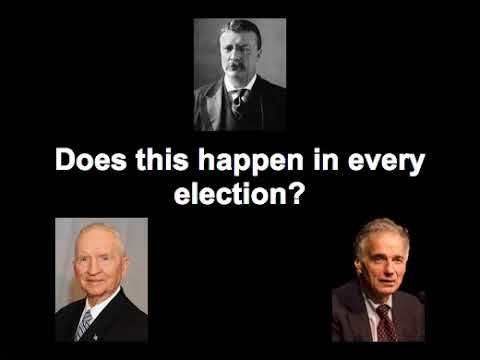
The Center for Election Science explains favorite betrayal in instant-runoff voting: in some elections, ranking your favorite first can cause your least favorite to win. It contrasts this with plurality voting's spoiler problem.
“here's a video explaining the strategic voting issue” (HN, 2021)
This issue has been solved by math PhD's and political scientists who've studied the matter for decades. www.electology.org/approval-voting-vs-irv IRV can elect X even if Y was preferred to X by an arbitrarily huge majority and got more first-place votes than X. www.electology.org/core-support Regarding favorite betrayal, you might enjoy this video. [this video]
Explains favorite betrayal in instant-runoff voting.
This is a shorter video from the same source as the other reply that deals specifically with IRV: [this video] >Unless I misunderstand IRV, there is no "vote stealing" due to your vote automatically dropping off to your next-preferred candidate. The problem is that they drop to your next preferred candidate who has not been eliminated . If you're thinking about the problems that occur with plurality voting, it's easy to imagine your second choice will always be a popular "safe" choice, but if third parties get stronger (which is surely the point?) those safe choices can end up being eliminated before your second choice can help them.
Shorter video dealing specifically with IRV problems.
I always recommend this pair of videos when discussing STAR voting vs other alternative systems. The first video is an easy-to-follow explanation of how spoiler effects can happen in both plurality voting and IRV [1]. In the second [2], the guy who created Star voting applies Ka-Ping Yee's methods to Star voting and animates it side-by-side with alternative systems to show its performance. [1] [this video] [2] [link]
Easy-to-follow explanation of spoiler effects in plurality voting and IRV.
RCV doesn't solve what is claimed in the article. It is interesting since countries that they give as examples are clear evidence of this. (Yes, I'm going to advocate cardinal systems like Approval, Range/Score, and STAR) > More moderate candidates. RCV doesn't encourage this at all. Australia is a clear example of this. In the house Liberal and Labor (the two major parties) control 85% of seats. The next major party (National) is part of a coalition with the Liberals and this sums to 95%. Things are only slightly better in the senate. Look at any country that uses IRC/RCV and you'll see a similar pattern. The system didn't encourage more parties and more moderates, Australia still has divided politics like America. As to the more parties, I have an alternative explanation. They use a parliament, which uses proportionate representation. Don't buy it? Go look at countries with parliaments and don't have IRV and you'll find similar distributions. We also need to recognize that in America our parties are closer to coalitions in other countries out of the necessity. I'm not sure how anyone can look at someone like AOC or Sanders and think they are the same "party" (by other country norms) as Biden or Pelosi (similarly on the Republican side, though Trump caused a consolidation). > ranked-choice voting can drastically reduce the possibility of spoilers. Yes, but no. It reduces spoilers when a candidate is not going to win anyways (e.g. Jo Jorgensen spoiling Trump). But this does n
Explains the strategic voting issue in ranked-choice voting.
I agree with what /u/zestyping says in the other comment, so I won't repeat it. But here's a video explaining the strategic voting issue: [this video] Also, wikipedia has an example of a non-monotonic result here: [link]
Yes, I understand how IRV works, and indeed I used to believe it was flawless. >There is no way that placing your preferred candidate first can ever result in your vote not being given in the order you choose. No, but it can end up harming your second choice, by eliminating them early, so your vote for them doesn't matter. This is called Favourite Betrayal, and it's a serious problem with IRV: [this video] And as a quick worked example, if you have 4 people voting A>B>C, 4 people voting C>B>A and 3 people voting B>A>C, then A wins. If one person voting C>B>A changes their vote to B>C>A, then B wins. So by putting C first, they were harming their second choice B.
Explains favourite betrayal as a serious IRV problem.
This is a great introduction to voting theory, but there are several notable omissions. The video doesn’t tell the whole story about what it presents as “ranked voting”, usually known as Condorcet voting. There are systems that always yield the Condorcet winner when one exists, and do a good job of resolving the unavoidable but rare preference cycles as consistently as possible. The most standard one is the Schulze method, which is used by the Debian, Ubuntu, and Gentoo projects, among many other organizations. [link] The video asserts that what it presents as “elimination voting”, usually known as instant-runoff voting, doesn’t suffer from the third-party spoiler effect. But that’s only true as long as the third party never gains enough support to have a real chance of winning. [this video] (I wonder: can you think of a pair of powerful organizations who might want to ensure that third parties never gain enough support to have a real chance of winning? Hmmm.) Finally, the video doesn’t talk about approval voting or score voting, which use a different ballot type to which Arrow’s impossibility theorem does not apply. Some game theorists argue that these systems actually do a better job of finding the ideal Condorcet winner than Condorcet systems do, in the presence of strategic voting. [link]
Counter to the claim that elimination voting avoids the spoiler effect.
The problem with Instant Runoff is called "Favourite Betrayal", where placing a party second can lead to them being eliminated before your vote for them can be counted. [this video] >a candidate can still be elected despite not being approved or preferred by a majority. Only if there are no candidates preferred by a majority, in which case no voting system can produce a result people are happy with. The only way a ranked system could avoid this is by forcing people to choose between options they hate, and calling that a majority, which doesn't seem much better than letting someone with 30% approval win because it was the most. In fact, there's no reason you couldn't add a majority victory criterion to approval voting.
The Later-no-harm criterion is basically a nonsensical idea invented to make IRV look better than it is. See a Princeton math PhD dissect it here. [link] tl;dr for non-experts (I co-founded the Center for Election Science and have studied voting methods since 2006). The idea behind LNH is that if I vote for the Green in 1st place, it's "safe" to then rank the Democrat 2nd, because that can't cause the Democrat to defeat the Green. See this explained visually in this video by Andy Jennings, another CES co-founder who did his math PhD thesis on voting methods. [this video] The Later-no-harm criterion is highly misleading, because "safe" here means safe for the CANDIDATE. But tactical voting is about what's good for the VOTER, not the candidate. With IRV, the Green voter's best strategy is to actually rank the Democrat in 1st place. So the whole notion that he can safely rank the Democrat #2 after he's ranked the Green #1 starts with a false premise. If he's rational, he WILL NOT rank the Green #1. It's the same reasoning that Democratic primary voters have about far left candidates. Even if you win the nomination and advance to the general, you're so far left that you'll probably lose against the Republican, by not capturing enough of the center of the electorate. Approval Voting actually makes it safe to ALWAYS vote your favorite. And, in general, to vote for everyone you prefer to your favorite of the frontrunners.
Visual explanation of the later-no-harm criterion by a voting theory PhD.
> with ranked choice voting the stigma of voting third party is removed That is a myth. Instant Runoff Voting does not eliminate the lesser evil (spoiler) problem. See this explained by a math PhD. [this video]
Math PhD explains IRV does not eliminate the lesser-evil problem.
This is false. See the game theory explained by Andy Jennings, who did his math PhD thesis on voting methods and co-founded the Center for Election Science. [this video] Here's a more technical explanation by Warren Smith, a Princeton math PhD whose work was the centerpiece of the book "Gaming the Vote". [link] Finally, see real world data from a century of IRV in Australia. [link]
Game theory of IRV explained by a voting methods PhD.
If Nader takes enough votes from Gore, then Gore will have the fewest first place votes and get eliminated first. Then Nader has to go up against Bush and it all comes down to who the Gore voters put as their second choice. It may only take a small percentage of them putting Bush second for Bush to win. [this video] Was this election spoiled? By Nader or by Gore? You can argue the semantics of what "spoiler" means, but to me it's clear that IRV doesn't handle this situation well. It is safe to vote for a third-party only if they can't win. When three-way elections get close, you have to be more careful.
Illustrates a Nader-Gore-Bush scenario where IRV fails.
> it exacerbates the issue of voting being highly tactical. No. Approval voting has been extensively studied by game theory experts like NYU political science professor Steven Brams, and found to be one of the most resistant to tactical voting. Computer simulations show it performing exceptionally well even with highly strategic voters. [link] [link] There's even a mathematical theorem (proof) that, given plausible strategic behavior by voters, approval voting always elects a beats-all "Condorcet winner" when one exists. This is mild (some would say GOOD) reaction to strategy. [link] > Checking approve on someone I believe to be more popular than my favorite candidate lowers the chance my favorite candidate wins. Yes, this is beneficial not harmful. The alternative is that the voting method must ignore all preference data about the relative support of X vs. Y as long as the voter prefers X to Y. That causes big problems. [link] It is precisely why ranked voting methods like Instant Runoff Voting are so vulnerable to tactics. If I prefer the Green, my general best strategy is to tactically rank the Democrat in 1st place, thus "burying" the Green and making the mere appearance of un-electability a self-fulfilling prophecy. [this video] [link] The major moral of voting theory is to AVOID RANKED VOTING METHODS, favoring RATED voting methods like score voting, STAR voting, and approval voting. Here's a presentation I gave in 2015 to the Colorado League of Women Voters explaining more.
Shows strategic burying of third parties under IRV.
For a more interesting experiment Fargo had an election with Approval Voting[0]. Unfortunately RCV (IRV) doesn't solve many of the problems that it claims to do. One of the claims is that IRV prevents spoilers, which is objectively false[1][2]. We're pretty interested in the Favorite Betrayal Criterion to prevent this[3]. We also see that IRV has a fairly poor voter satisfaction efficiency (VSE)[4][5]. It really feels like people just watched the CGP Grey videos on election science and dug no further. Even Arrow himself said that cardinal voting (Approval, score, STAR) is probably the likely answer. They also tend to be much simpler as they only are single rounds and resistant to people accidentally "ranking" two candidates equally (which you might actually favor two candidates equally and these methods let you express that). [0] [link] [1] [this video] [2] [link] [3] [link] [4] [link] [5] [link]
Supports claim that IRV does not prevent spoilers.
Perhaps I am suffering a failure of imagination, but in what circumstance does "ranking someone too high .. cause them to lose"? Edit: Found this[0] talking about it; what remains unclear to me is whether this should be seen as "this hurts my candidate" over "this result better reflects the electorate". [0]: [this video]
Explains how ranking someone higher can make them lose.
this is obviously false. simply consider that green party supporters usually vote democrat. with score or approval voting, they'd ALSO want to vote for the green. whereas with ranked voting methods, they'd still strategically rank the democrat in 1st place, crushing any hope for the greens. [this video]
Supports argument that ranked methods push strategic first-place votes for major parties.
no. scoring is more resistant to strategy. consider a green party supporter who normally votes democrat. with score voting or approval voting, he also votes green (of course). with ranked voting, he still ranks the democrat strategically in 1st place to avoid getting the republican, and that makes it impossible for third parties to grow. ranking is too vulnerable to strategy. [this video]
Supports argument that scoring resists strategy better than ranking.
strategy affects all deterministic voting methods, and an optimal ranked ballot can be quite complex. see an example from andy jennings, who did his math phd thesis on voting methods and co-founded the center for election science (with myself and some others). [this video] optimal approval voting strategy is simply to approve everyone you prefer to your expected satisfaction. to an approximation it's, "vote for who you normally would, plus everyone you like better." so it's rarely any more taxing than now, and often easier. hundreds of thousands of voters have now used approval voting in fargo and st louis, and we've heard no reports of difficulty. approval voting is also simpler in essentially every way we can objectively measure. most of the points here apply to approval voting even more so. [link]
Example of optimal ranked ballot strategy being complex.
Video list and Hacker News comment labels from HackerTube (prompted by @karpathy), released under ODC-By 1.0, built on the open-index/hacker-news archive. Hacker News data is provided by Y Combinator; comments remain the work of their authors. Video titles, channel names and thumbnails belong to their creators and are shown via YouTube. HackerTube Watch is an unofficial edition. Data export of 2026-10-31.
 Plays via YouTube's privacy-enhanced embed
19 Hacker News comments
From the HN archive; up to 20 kept per video, favoring different commenters. Recommendations first.
Read more
Read more
Citations, criticism and jokes
Read more
Read more
Read more
Read more
Read more
Read more
Read more
Read more